Day 1: French Quarter Essentials and Riverfront Walking
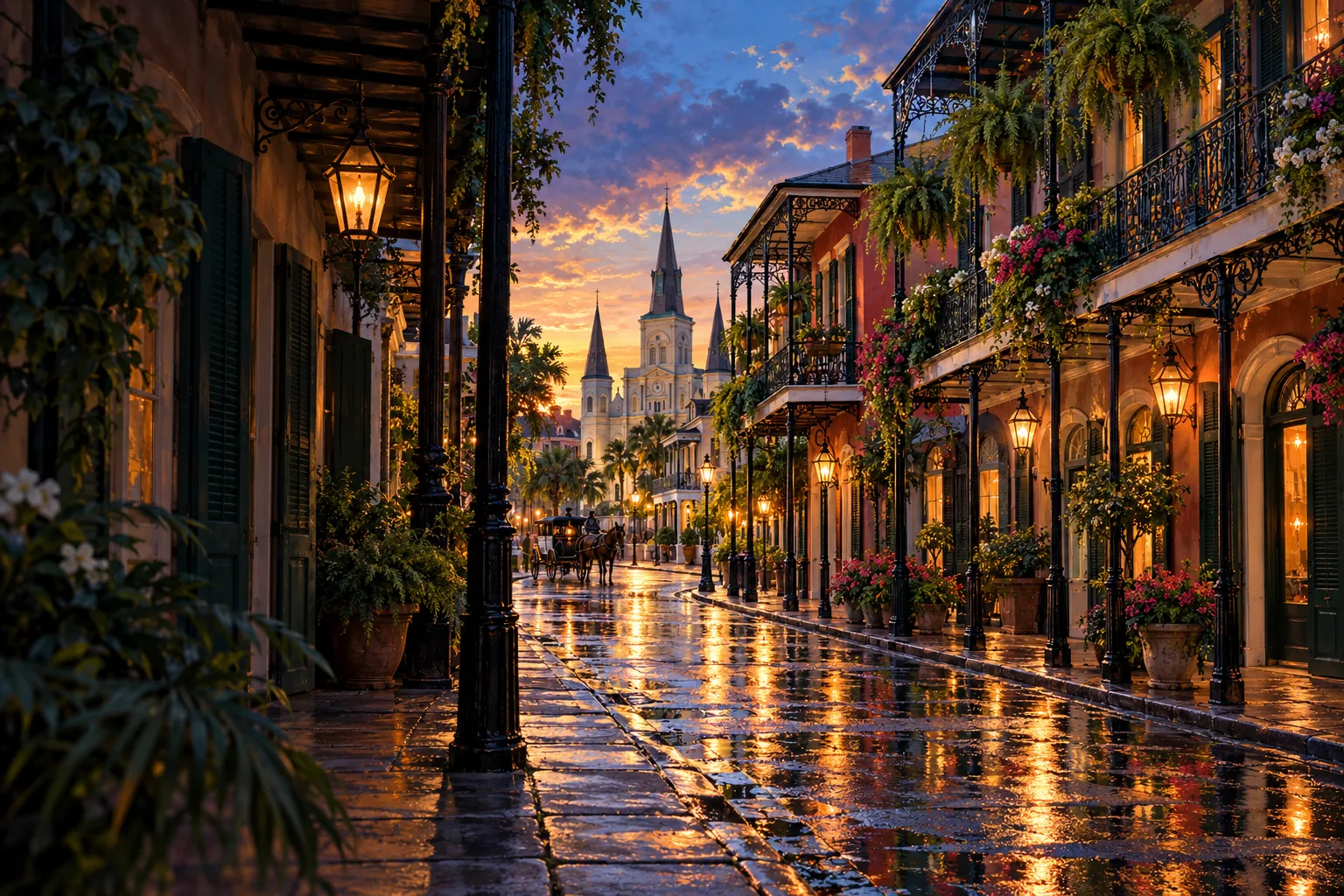
Your first day should center on the historic heart of the city: the French Quarter. Begin at Jackson Square, the site where the Louisiana Purchase was finalized. The square is flanked by the St. Louis Cathedral, the oldest continuously active Roman Catholic cathedral in the United States. While the interior is often open to the public, visitors should verify the daily mass schedule to ensure tours do not interfere with services.
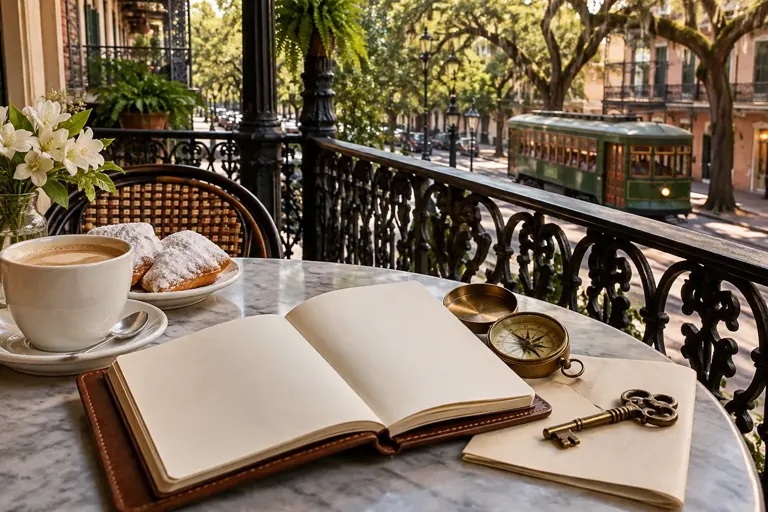
From the square, a short walk leads to Cafe Du Monde on Decatur Street. While the line for a table can be long, the "to-go" window at the back of the building often moves significantly faster. A traditional order of beignets—fried dough covered in powdered sugar—is best paired with a cafe au lait. Afterward, walk toward the French Market, which has served as a trading post for over 200 years. Today, it features a mix of local crafts, food stalls, and souvenirs.
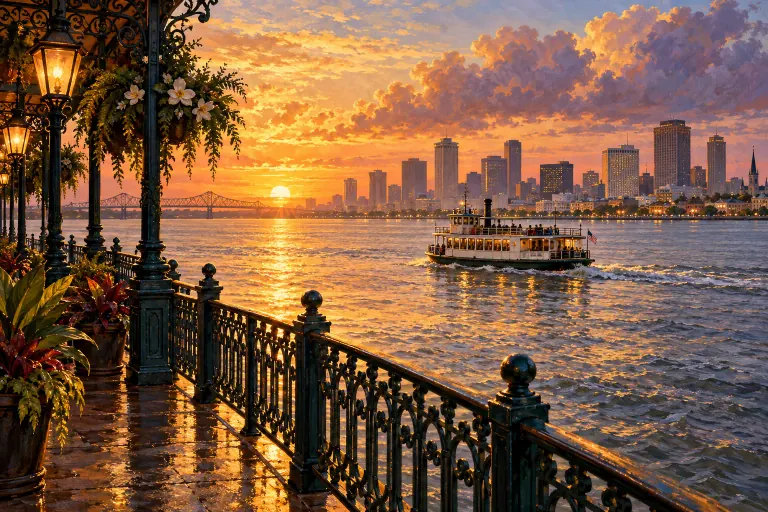
Spend your afternoon walking along the Woldenberg Riverfront Park. This paved path offers expansive views of the Mississippi River and the industrial activity of the Port of New Orleans. As evening approaches, head to Royal Street. Unlike the rowdy atmosphere of Bourbon Street, Royal Street is known for its world-class antique shops, art galleries, and street performers. For your first night of music, consider booking a set at Preservation Hall. This venue is all-ages and focuses on traditional New Orleans jazz, but because sets are limited and seating is scarce, advance reservations are highly recommended.
Day 2: Garden District Elegance and Magazine Street Stops
On your second day, leave the French Quarter behind to explore the "American Sector" of the city. The most efficient way to reach this area is via the St. Charles Streetcar, the oldest continuously operating streetcar line in the world. Use the Le Pass app to purchase a $3.00 1-Day Jazzy Pass, which allows for unlimited transfers between streetcars and buses. The ride itself is a narrated tour of historic mansions and oak-lined avenues.
Disembark at Washington Avenue to enter the Garden District. This neighborhood is famous for its 19th-century Greek Revival and Italianate architecture. Note that Lafayette Cemetery No. 1, a popular stop for its "cities of the dead" above-ground tombs, remains closed to the public for ongoing restoration and safety improvements. Visitors are encouraged to view the tombs from the perimeter fences or book a guided walking tour that explores the surrounding neighborhood's history.
Lunch should be found on Magazine Street, a six-mile stretch of local boutiques, cafes, and restaurants. This area provides a necessary break from the tourist-heavy French Quarter. If you plan to dine at Commander’s Palace, be aware of the strict dress code—business attire is generally required, and shorts are not permitted. The afternoon is best spent browsing the independent shops between Washington Avenue and Louisiana Avenue, where you can find locally made jewelry and art.
Day 3: Mid-City Culture and City Park Explorations
Day three focuses on the northern part of the city, accessible via the Canal Streetcar (look for the "City Park" or "Museum" destination signs). City Park is one of the oldest urban parks in the country and is roughly 50% larger than New York’s Central Park. It is home to the New Orleans Museum of Art (NOMA) and the Sydney and Walda Besthoff Sculpture Garden. The sculpture garden is free to the public and features over 90 works set among lagoons and 600-year-old live oak trees.
For a local culinary staple, head to Parkway Bakery and Tavern at the edge of the park. They are famous for their "poor boy" sandwiches, particularly the roast beef and fried shrimp varieties. Ordering your sandwich "dressed" means it will come with lettuce, tomatoes, pickles, and mayonnaise. Spend the rest of the afternoon at the Carousel Gardens Amusement Park or simply walking the trails around Big Lake.
If your schedule allows, the National WWII Museum in the Warehouse District is a vital stop. The museum is open daily from 9:00 a.m. to 5:00 p.m. and recently opened its final permanent exhibit hall, the Liberation Pavilion. This pavilion explores the end of the war and the post-war era, providing a comprehensive conclusion to the museum's narrative. Due to the museum's size, first-time visitors should plan for at least three to four hours to see the primary exhibits.
Day 4: Marigny Jazz and Optional Day Trip Logistics
For your final day, you have the choice between a deep dive into local music or a trip outside the city limits. Many visitors opt for a Swamp Tour in the morning. These tours typically offer hotel pickups from central French Quarter or CBD locations, which eliminates the need for a rental car. You will likely see alligators, egrets, and nutria while learning about the Louisiana wetlands' fragile ecosystem.
Alternatively, a visit to the Whitney Plantation offers a somber and necessary look at the region's history. Unlike other area plantations that may focus on architecture or "Gone with the Wind" aesthetics, the Whitney Plantation is the only museum in Louisiana with an exclusive focus on the lives of enslaved people. It is open daily from 9:30 a.m. to 4:30 p.m., and booking an audio tour in advance is recommended for a self-guided experience.
Spend your final evening on Frenchmen Street in the Marigny neighborhood. This is where locals go for live music. The three-block stretch features venues like Snug Harbor, The Spotted Cat, and Blue Nile. Most clubs do not have a cover charge, though a one-drink minimum and tipping the band are standard etiquette. This area feels more authentic than Bourbon Street and provides a perfect capstone to a first-timer’s trip.
Strategic Proximity: How to Save 2 Hours Daily
The biggest mistake first-time visitors make is "backtracking" across the city. New Orleans is laid out in a crescent shape along the river, meaning distances that look short on a map can take 45 minutes in traffic or on a streetcar. By staying in the Central Business District (CBD) or the Warehouse District, you are positioned between the French Quarter and the Garden District, cutting your transit times in half. Grouping your Garden District visit with a Magazine Street lunch, or your City Park visit with a Mid-City dinner, ensures you spend more time seeing the city and less time waiting for rideshares.
Independent research for NewOrleans.blog.
Essential Logistics: The Le Pass App and RTA Tips
Navigating New Orleans public transit is significantly easier with the Le Pass app. This official tool from the New Orleans Regional Transit Authority (RTA) allows you to track streetcars and buses in real-time. This is crucial because, while the streetcars are historic, they do not always run on a precise minute-by-minute schedule. A single ride costs $1.25, but the 3-Day Jazzy Pass for $8.00 is the most cost-effective option for a four-day itinerary. Please note that streetcar drivers do not give change; if you pay with cash, you must have the exact amount.
What to verify before you go
- Lafayette Cemetery No. 1 Status: Check the Save Our Cemeteries website for the latest reopening updates before planning a visit.
- WWII Museum Tickets: Verify current hours and special exhibit availability for the Liberation Pavilion on the museum’s official site.
- Restaurant Reservations: High-demand spots like Commander's Palace or Antoine's often require bookings weeks in advance.
- Streetcar Service Alerts: Check the RTA website or Le Pass app for maintenance-related closures, especially on the St. Charles line.