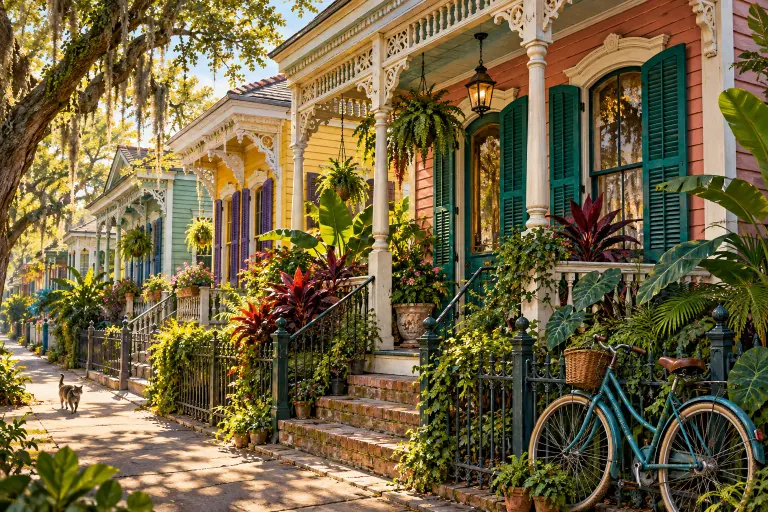

The Logistics of a Car-Free Romantic Getaway
New Orleans is suited for car-free travel due to its compact historic core. The Regional Transit Authority (RTA) provides streetcars, buses, and ferries that connect popular districts. As of 2026, the standard single-ride fare is $1.25, but the $8.00 3-day Jazzy Pass is the most practical option for a weekend visit. These passes are purchased and managed through the Le Pass app, which also provides real-time tracking for vehicles to minimize wait times at transit stops.
Walking is the primary mode of transport within the French Quarter and the Warehouse District, where sidewalks are generally well-maintained. For longer distances, streetcars offer a scenic and historic alternative. The St. Charles line, a National Historic Landmark, connects the CBD with the Garden District. Note that these historic cars lack air conditioning and can experience delays during festivals. Checking "Service Alerts" in the Le Pass app is standard practice for efficient travel.
Day 1: Warehouse District Exploration
The Warehouse District, also known as the Arts District, serves as an ideal base. Originally the 19th-century industrial heart, the area features brick warehouses converted into boutique hotels and galleries. The district offers wider sidewalks and a quieter atmosphere than the French Quarter. Staying here provides access to the National WWII Museum and the Ogden Museum of Southern Art, both major cultural hubs within walking distance.
The culinary scene in the Warehouse District is world-class and highly accessible on foot. Establishments like Restaurant Rebirth and Vyoone’s offer romantic atmospheres with a focus on Cajun and Creole traditions. Secluded courtyards provide an intimate setting away from the downtown bustle. Reservations are typically recommended for weekend dining. The district’s proximity to the St. Charles Streetcar at Julia Street makes it a strategic starting point for exploring further uptown without a car.
Day 2: The St. Charles Streetcar and Garden District
The second day leverages the St. Charles Streetcar, the oldest continuously operating system in the world, opened in 1835. The line uses historic cars that travel under a canopy of ancient live oaks. Boarding at Julia Street allows visitors to secure a seat before the crowded Canal Street terminus. The ride offers a view of the city's architecture, passing from CBD skyscrapers into the 19th-century grandeur of the Garden District.
Upon disembarking at Washington Avenue, the Garden District is best explored on foot. The neighborhood is famous for Greek Revival and Italianate mansions. While Lafayette Cemetery No. 1 is currently closed for restoration, visitors can view the tombs from the sidewalk. For a midday break, Magazine Street is a six-mile corridor of independent shops located near the streetcar line. The walk passes through scenic residential blocks, providing a peaceful contrast to the urban center.
Day 3: Algiers Point Ferry and River Views
The final day focuses on the Mississippi River. The Algiers Point Ferry departs from the foot of Canal Street. The crossing takes ten minutes and is included in the Jazzy Pass. This ferry line is one of the oldest in the United States and offers panoramic views of the skyline. The ferry operates on a 30-minute schedule, departing Algiers Point on the hour and half-hour.
Algiers Point, founded in 1719, is the city’s second-oldest neighborhood. The area is walkable, with a levee path ideal for a quiet afternoon. The neighborhood features Victorian cottages and historic pubs like the Crown & Anchor. Visitors should remain mindful of the return ferry schedule, as the last departure from Canal Street is typically at 10:45 PM on weekends. Missing the final ferry necessitates a longer rideshare trip across the bridge.
Essential Logistics and Safety
The success of a car-free weekend relies on digital tools. The Le Pass app is the essential resource for fare payment and tracking. For airport transfers, the 202 Airport Express bus links to the CBD for $1.25. While the city is walkable, having a rideshare app as a backup is recommended for late-night travel or sudden weather changes. Safety advisories suggest staying on well-lit thoroughfares and remaining aware of surroundings. The NOPD Public Safety Data Portal provides information on neighborhood trends.
Book these before anything else
A car-free weekend runs on a short list of reservations, and they are the ones that disappear first. The pattern worth copying: lock the one dinner that matters most as soon as your dates are set — the city’s destination dining rooms book out weekends well ahead — and reserve any timed experience you would be genuinely disappointed to miss, whether that is a jazz brunch, a cooking class or a specific show. Leave the rest of the weekend unbooked on purpose. With only two or three evenings, a single immovable commitment per day is the ceiling; more than that and the itinerary starts running you, which is the opposite of what this trip is for. Restaurants that do not take reservations reward early arrival instead, so pair each booked anchor with a flexible backup nearby and the weekend absorbs surprises gracefully.
The wet-weather version of this weekend
Rain reshapes a walking itinerary fast, so keep a parallel plan that preserves the weekend’s character indoors. The Warehouse District’s museum cluster substitutes cleanly for a morning of strolling, long lunches stretch naturally when the streets are wet, and the covered French Market plus the Quarter’s galleries and antique rooms turn a soggy afternoon into a browsing one. Streetcar rides themselves hold up in rain — the view is the point, and the historic cars are arguably more atmospheric with the windows streaked. What changes most is footwear and spacing: waterproof shoes, fewer neighborhood hops, more time per stop. Check the radar over coffee each morning and decide then which version of the day you are running; the couples who enjoy rainy New Orleans are the ones who committed to the indoor plan early instead of sprinting between awnings all afternoon.
Budgeting the weekend’s rides honestly
Car-free does not mean transport-free, and couples plan better when they price the weekend’s movement as a single line item. A realistic tally: the airport transfer in and out, a transit pass each for the streetcar days, and two or three ride-app trips for the late returns and the one cross-town reservation. Totaled, it almost always lands well under what a rental car, hotel parking and fuel would have cost for the same days — which is worth computing once, if only to stop second-guessing the car-free decision every time a fare appears. The spending principle that follows: be cheerfully frugal by day, when the streetcar is the better experience anyway, and spend without hesitation at night, when a direct ride home protects both safety and the mood of the evening. The money saved on parking buys every late-night ride of the weekend several times over.
Sources and update notes
This guide was developed using independent research and official data from: