
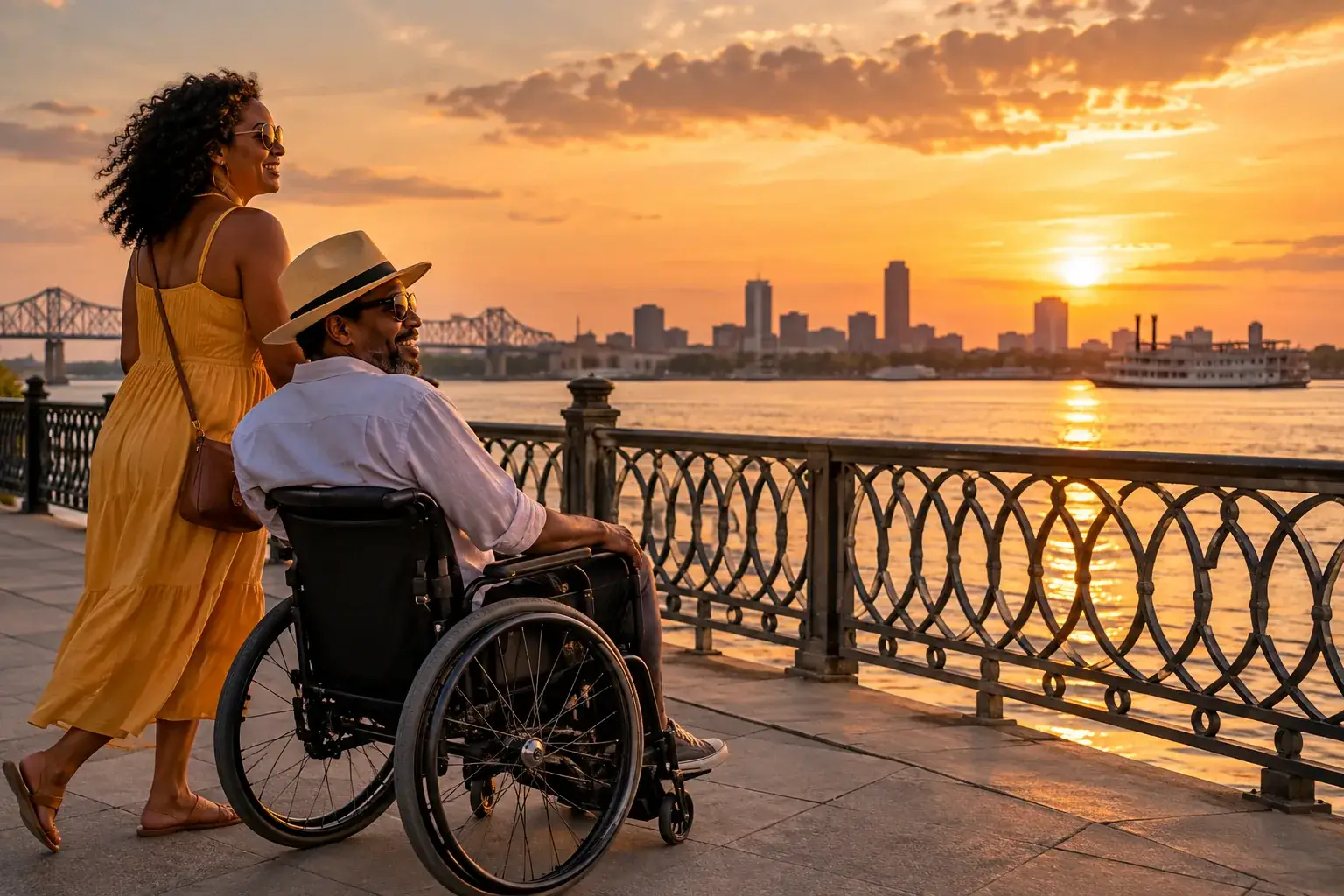
Navigating the French Quarter: Sidewalks and Ramps
Historic streets can include uneven surfaces, narrow sidewalks and curb transitions. This guide does not certify any block as accessible. Ask the destination about its entrance and the approach from your intended stop or drop-off point, including any construction-related detours.
Check the route for current sidewalk conditions and curb access. If a pedestrian route is obstructed or impassable, do not enter traffic to bypass it. Stop and seek a suitable pedestrian alternative or assistance from the venue or transport provider.
Accessible Swamp Tours: Boats with Ramps and Lifts
A trip to the Louisiana bayou is a quintessential experience, but not all tours are accessible. The most important distinction is between traditional swamp boats and airboats. Airboats are generally not wheelchair accessible as they lack ramps and require passengers to step down into recessed seating. Ask each operator whether the exact vessel and departure can meet your needs; vessel type alone is not confirmation.
Operators like Jean Lafitte Swamp Tours have equipped their primary vessels with ramps that allow wheelchairs to roll directly onto the main deck. These boats offer ample space for mobility devices to maneuver. It is highly recommended to call the tour provider at least 48 hours in advance to confirm an accessible vessel is scheduled. Additionally, if you require transportation to the launch site, verify that the company’s shuttle service includes a lift-equipped vehicle, as standard passenger vans are often used for general pickups.
Historic Landmarks: St. Louis Cathedral Entry Guide
St. Louis Cathedral is a premier landmark, but its front entrance facing Jackson Square features steps that are impassable for wheelchairs. To enter the sanctuary, visitors must use the dedicated accessible entrance on the west side of the building. This ramp is situated near the Angel of Harmony statue, accessible via Pere Antoine Alley, which runs between the Cathedral and the Presbytere.
Once inside, the main floor of the Cathedral is flat and offers clear views of the altar. While the historic nature of the building means some side chapels have narrow entryways, the primary seating areas and central aisle are fully accessible. Before planning your visit, check the official Cathedral schedule, as the building closes for mid-day maintenance or private events. The surrounding Jackson Square is paved with relatively flat flagstones, making the plaza easy to navigate once you have crossed the perimeter streets.
Accessible Transportation: Streetcars vs. RTA Buses
New Orleans’ streetcars represent a tale of two systems. The historic green cars of the St. Charles Avenue line are not currently ADA accessible; they require climbing steep steps to board. While a modernization study aims for an accessible St. Charles line by November 2026, travelers should currently rely on the red streetcars on the Canal Street and Rampart-St. Claude lines. These modern cars feature motorized lifts at the middle doors for easy boarding.
The New Orleans Regional Transit Authority (RTA) bus system is a reliable and fully accessible alternative. Every bus is equipped with a kneeling feature and a deployable ramp. The "Le Pass" mobile app is an essential tool, providing real-time tracking and indicating which upcoming streetcars are lift-equipped. For a flat fare of $1.25 per ride or $3.00 for a day pass, the bus and red streetcar network offers the most cost-effective way to traverse the city.
Wheelchair-Friendly Museums and Practical Tips
The National WWII Museum is one of the most accessible major attractions in the country. The entire campus, including the Higgins Hotel and the Liberation Pavilion, was designed with ADA compliance in mind. Every pavilion is connected by elevators, and the museum provides manual wheelchairs on a first-come, first-served basis. Similarly, the New Orleans Museum of Art and the Sydney and Walda Besthoff Sculpture Garden in City Park offer wide, paved paths through the oaks and lagoons, providing a barrier-free way to experience world-class art.
Planning a mobility-friendly trip requires a proactive approach to logistics. When booking a hotel, call the property to verify specific features like bed height and roll-in showers. Newer hotels in the Central Business District (CBD) are often a safer bet than historic French Quarter inns. For river excursions, the Steamboat Natchez offers wheelchair access to its main deck for dining and views, though upper decks are only accessible via stairs. Always carry a backup battery for electric chairs, as humid weather and uneven terrain can drain power faster than expected.
What to verify before you go
- Streetcar Status: Check the RTA Le Pass app for lift-equipped cars on your route.
- Tour Vessel Specs: Confirm with swamp tour operators that your boat has a functional ramp.
- Construction Alerts: Review the City of New Orleans Public Works website for French Quarter sidewalk closures.
- Restroom Locations: Identify accessible restrooms in hubs like the French Market or Canal Place.
The booking script that gets real answers
“Is the tour wheelchair accessible?” invites a yes that may only mean the office door has a ramp. Ask narrower questions and the answers become usable. For any operator, work down this list: What is the boarding method for my specific mobility device — ramp, lift or transfer — and what are the weight and width limits? Is the full route step-free, or are there segments where the group leaves the accessible path? How long is the tour between opportunities to rest or use an accessible restroom, and where are those restrooms? If weather or mechanical issues force a vehicle substitution, is the replacement also accessible? Write the answers down with the name of the person who gave them, and reconfirm the day before — accessible vehicles are often the scarcest in a fleet, and a substitution you hear about at the curb is the failure this entire process exists to prevent.
Equipment and companion logistics
Plan the device the way you plan the tickets. Power-chair users should start each day at full charge and know where midday charging is realistic — a restaurant lunch stop handles it better than a walking segment. New Orleans sidewalks are hard on equipment, so pack the small repair items you would carry for a rough-surface day at home, and note that same-day wheelchair repair options in any city are thin; prevention is the strategy. If you travel with a companion, agree in advance on the moments they will assist — boarding, uneven thresholds, crowded venues — so neither of you is negotiating help in front of a tour group. And when an operator offers a companion discount or requires an attendant for certain tours, that policy tells you something useful about how physically demanding they judge their own route to be.
Sources and update notes
Information regarding infrastructure and transit is based on 2026 service schedules and public works reports. Accessibility features for private tours and museums are subject to change. Always verify current status directly with providers before booking.