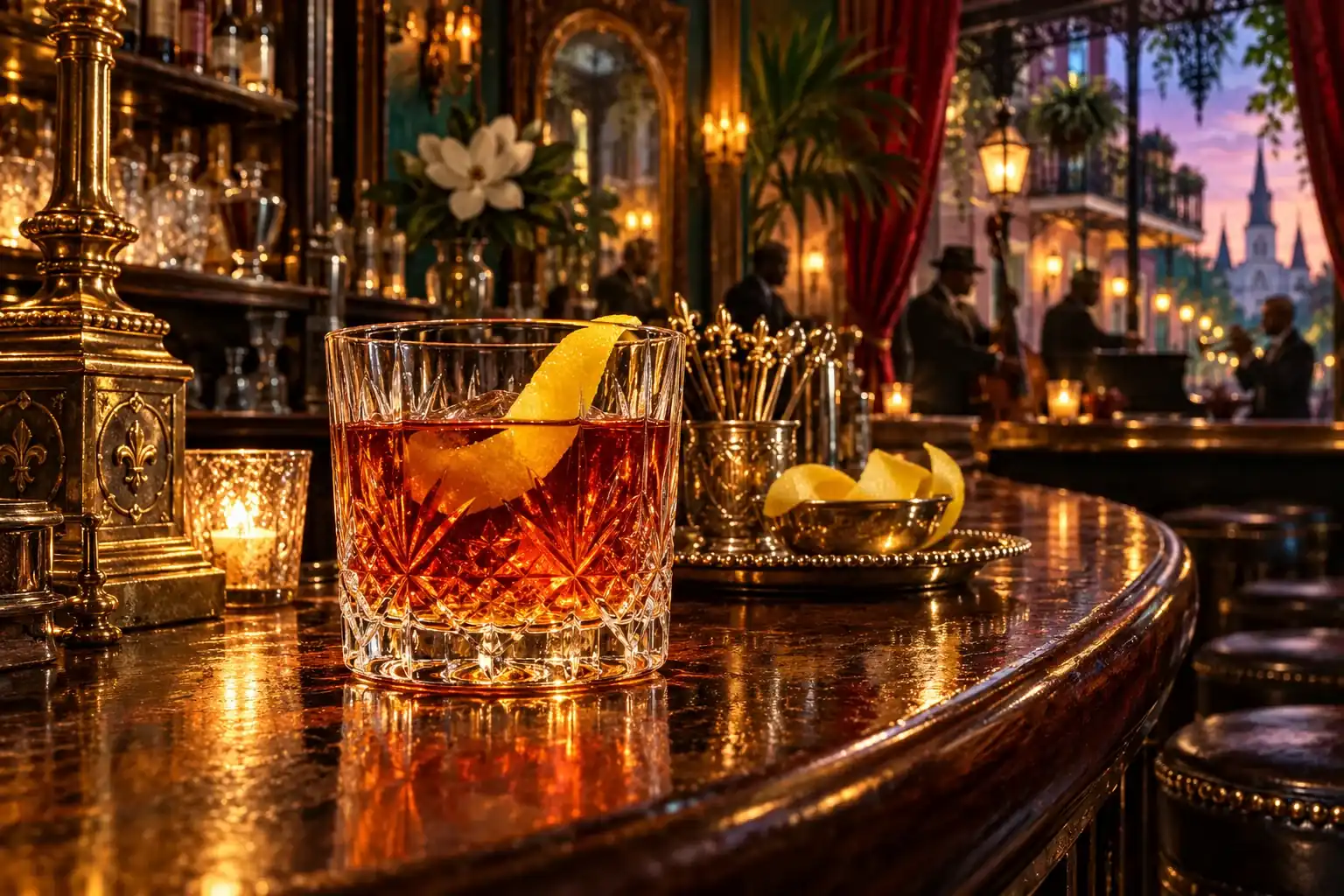
The 1850s Origins: Mapping the Original Coffee Houses
The Sazerac began in the "coffee houses" of the mid-19th century French Quarter. In the 1830s, these establishments were social hubs serving imported spirits. The most significant was the Merchants Exchange Coffee House at 126 Royal Street. It was here that the cocktail transitioned from a medicinal tonic into a social staple. By 1850, the site was renamed the Sazerac Coffee House by John B. Schiller, the local agent for Sazerac-de-Forge et Fils cognac, which served as the original base for the drink. The name "Sazerac" itself is derived from this brand of cognac.
A visit to 437 Royal Street is also essential to understanding these origins. In the 1830s, this was the apothecary of Antoine Peychaud, who created his namesake bitters based on a family recipe. Peychaud mixed his bitters with cognac and served them in coquetiers (egg cups), a term some believe inspired the word "cocktail." The transition from cognac to rye whiskey occurred in the 1870s, due to the phylloxera blight that devastated French vineyards and halted the export of brandy. Bartenders like Thomas H. Handy pivoted to American rye whiskey, which offered a spicier profile that complemented the existing bitters. Mapping these sites provides a window into a time when New Orleans was the primary port for European luxury goods and the epicenter of American cocktail innovation.
The Roosevelt Sazerac Bar: Art Deco and African Walnut
The Sazerac Bar at The Roosevelt New Orleans is the definitive home of the cocktail's legacy. Located at 130 Roosevelt Way, the bar is a masterpiece of Art Deco design, featuring a bar crafted from a single African walnut tree and WPA-era murals by Paul Ninas. These 1930s paintings depict scenes of old New Orleans, providing an elegant backdrop for a cocktail that predates them by nearly a century. The bar's interior remains largely unchanged since its opening in the late 1930s, offering a sense of historical continuity that is rare in modern hospitality. It remains a central hub for visitors seeking to experience the city's architectural and social history.
When ordering at The Roosevelt, the traditional Sazerac is used. One glass is rinsed with Herbsaint, and the excess is discarded. In the other glass, a sugar cube is muddled with several dashes of Peychaud’s bitters. Rye whiskey is added, along with ice, and the mixture is stirred. It is then strained into the Herbsaint-rinsed glass and garnished with a lemon peel. For those seeking rare spirits, the bar occasionally offers Thomas H. Handy Sazerac Rye, though availability is limited. It is advisable to check the current menu with the bartender, as rare bottle availability changes frequently. The bar is also famous for the "Storming of the Sazerac" on September 26, 1949, when women first demanded service at the previously male-only establishment, a moment celebrated annually at the hotel.
The Sazerac House: Immersive History on Canal Street
Opened in 2019, the Sazerac House at 101 Magazine Street is the modern gateway to the cocktail's history. Located in a restored 1860s building at the corner of Canal and Magazine, this free, interactive museum offers a deep dive into the drink's ingredients. The facility features exhibits on Peychaud’s bitters, rye whiskey production, and the brand's evolution. Visitors can participate in complimentary tours and tastings, though reservations are required and often book up weeks in advance. The museum’s archives provide a scholarly look at the 1850s sites, making it a practical first stop for any visitor to the French Quarter. The Sazerac House also functions as a micro-distillery, where guests can see the production of Sazerac Rye and Peychaud’s Bitters.
Historic Preservers and Modern Service Traditions
Several other institutions serve as living museums of New Orleans' liquid heritage. The Old Absinthe House at 240 Bourbon Street, built in 1806, has served Sazeracs for over a century. During the years when absinthe was banned, the bar pivoted to using substitutes like Herbsaint, maintaining the anise-forward profile that is critical to the Sazerac. Similarly, Tujague’s at 429 Decatur Street, founded in 1856, is the second-oldest restaurant in the city. Tujague’s is a bastion of the traditional Sazerac, serving it to generations of locals. The bar at Tujague’s is famous for its lack of stools, encouraging a standing-room-only social atmosphere that harks back to the city's early drinking traditions.
In 2008, the Louisiana Legislature officially designated the Sazerac as the Official Cocktail of New Orleans. The standard modern recipe involves a specific ritual: two chilled old-fashioned glasses are used. One is rinsed with Herbsaint and the excess is discarded. In the other glass, a sugar cube is muddled with several dashes of Peychaud’s bitters. Rye whiskey is added, along with ice, and the mixture is stirred. It is then strained into the Herbsaint-rinsed glass and garnished with a lemon peel. Variations exist, most notably the cognac-based Sazerac, which returns to the drink's original roots at spots like Arnaud’s French 75 Bar.
"The Sazerac is a testament to the resilience of New Orleans culture, surviving wars, prohibitions, and changing tastes to remain the city's most iconic pour." — Independent research for NewOrleans.blog
What to verify before you go
- Sazerac House Reservations: Entry is free, but tours must be booked in advance via the official website to guarantee entry.
- Roosevelt Bar Dress Code: The bar is upscale; "smart casual" attire is recommended, and athletic wear may be discouraged.
- Rare Spirit Availability: For those seeking specific vintages of rye, it is recommended to call ahead or check the daily menu at the bar.
- Operating Hours: Check official sites for Tujague's and Old Absinthe House, as bar hours can vary between weekdays and weekends.
Sources and update notes
This guide was compiled using independent research and verified against the following primary sources:
- Sazerac House: The Official History of the Sazerac Cocktail
- New Orleans & Company: The Sazerac Recipe and History
- The Roosevelt New Orleans: Official Dining and Sazerac Bar Information
- Louisiana State Museum: Records on 19th Century French Quarter Coffee Houses
Last updated: August 29, 2026. Details regarding spirit pricing and museum hours are subject to seasonal change. All historical claims are based on archival records and official institutional histories.