
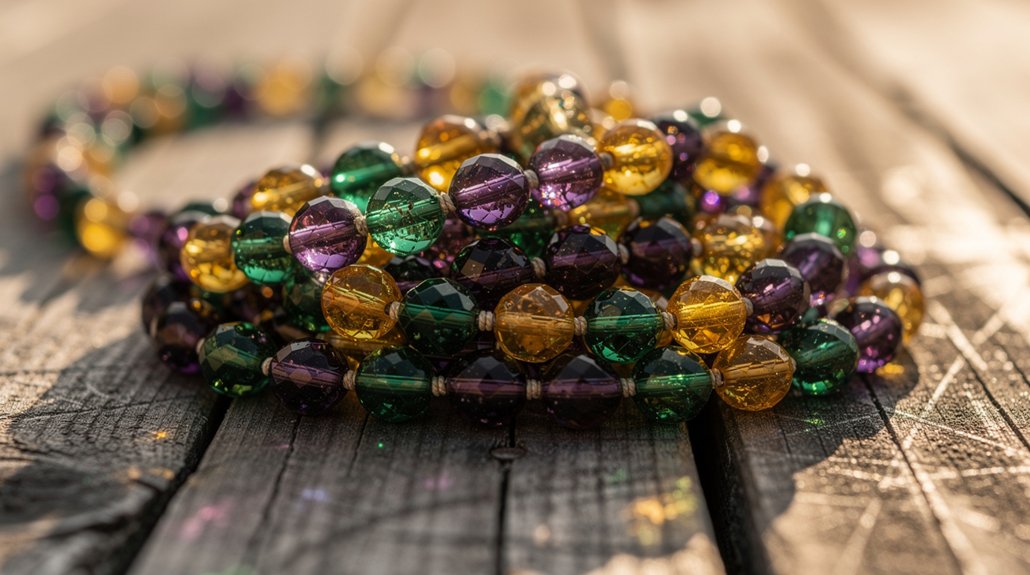
Glass Mardi Gras beads are the strands your grandparents might have caught. They're heavier than plastic, cool to the touch, and they shine in a way plastic can't copy. Krewes threw them for decades before plastic took over. Today you can still buy them, wear them and collect them.
This is a researched guide. Sources were checked on November 28, 2026. Prices and stock change fast before Mardi Gras, which falls on February 9, 2027, so confirm details with the seller.
As an Amazon Associate I earn from qualifying purchases. Product links go to Amazon searches, so you can compare what's in stock.
Key Takeaways
- Glass beads were the first Mardi Gras beads, and plastic replaced them in the 1960s.
- Glass feels heavier and cooler than plastic, and it can chip or break.
- New glass strands are easy to buy, and old ones are sold as collectibles.
- Glass is for wearing and gifting, not for throwing into a crowd.
- Store strands flat or hung, and keep them away from small children.
What Glass Mardi Gras Beads Are
A glass Mardi Gras strand is a necklace of glass beads, strung by hand or machine. The classic look is round beads in purple, green and gold. You'll also see cut beads with flat faces that catch the light, and strands with a pearl or rainbow finish.
They have real history behind them. The Louisiana Endowment for the Humanities describes the early parade beads as costume jewelry made of colored glass, often from Bohemia, in what later became Czechoslovakia. Rex made bead throwing popular in 1921, and glass strands were the prize for years after that.
The Mardi Gras New Orleans site adds that hand-strung glass beads became the must-have souvenir, with glass from Japan and then crystal beads from Czechoslovakia, before plastic arrived in the 1960s.
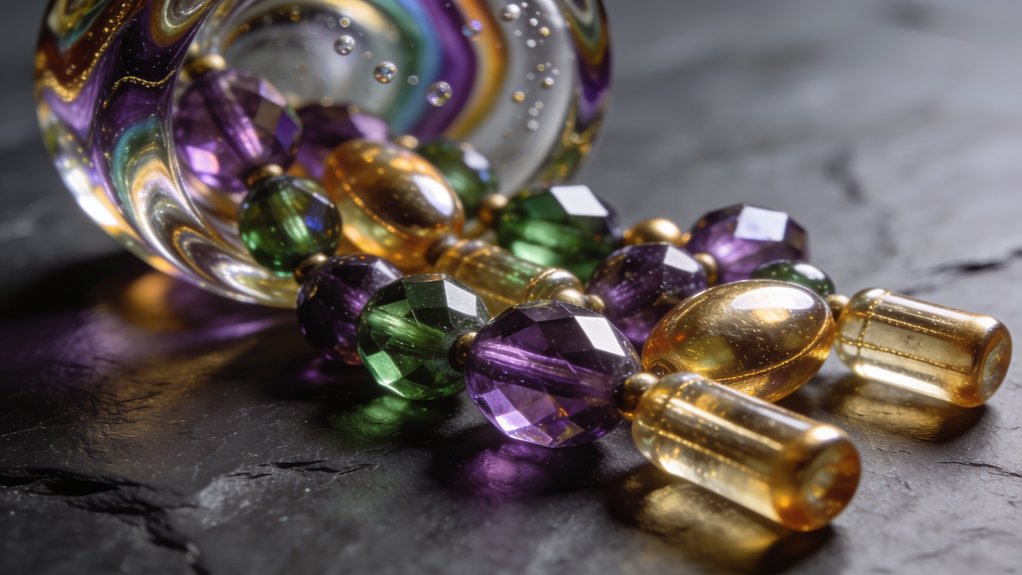
Glass vs. Plastic Beads
Pick up one of each and you'll know in a second.
| Glass | Plastic | |
|---|---|---|
| Weight | Heavy for its size | Very light |
| Feel | Cool and smooth | Warm and a bit waxy |
| Shine | Deep, clear sparkle | Bright painted shine |
| If dropped | Can chip or break | Bounces |
| Price | Higher per strand | Cheap by the dozen |
Plastic won the parade for simple reasons. The same humanities source says plastic cost about two-thirds of the price of glass, and it doesn't break when it lands on the street. That's why riders can throw thousands of strands in one night.
Glass kept one edge. It looks and feels like jewelry. If you want a strand to wear to dinner or give as a gift, glass is the better pick.
Styles, Sizes and Finishes
When you shop, three choices matter most.
- Bead size. Small beads, around 6 to 8 millimeters, look like classic vintage strands. Larger beads, 10 millimeters and up, show from across a room.
- Shape. Round beads are the standard. Faceted beads have cut faces and more sparkle.
- Length. A strand around 30 inches slips over your head with no clasp. Longer strands can be doubled.
Finishes change the look a lot. "AB" on a listing means an aurora borealis coating, which gives a rainbow sheen. Pearl-coated glass gives a soft, old-time look.
If you want the Carnival colors, search for purple, green and gold glass bead necklaces. If you'd rather string your own, Czech glass beads are sold loose and by the strand.
Where to Buy Glass Mardi Gras Beads
You have three main places to look.
Online. Mardi Gras supply shops and big marketplaces sell new glass strands by the piece and by the dozen. Read the listing closely, because "glass look" and "crystal style" often mean plastic.
In New Orleans. Some bead shops, costume shops and gift shops in the city carry glass strands, mostly in the weeks before Mardi Gras. Shopping in person lets you feel the weight and check the string.
Secondhand. Antique malls, estate sales and online auction sites are where older strands turn up. Our guide to vintage Mardi Gras glass beads shows you what to check before you pay.
Stock and hours change by season, so call a shop before you make a special trip.
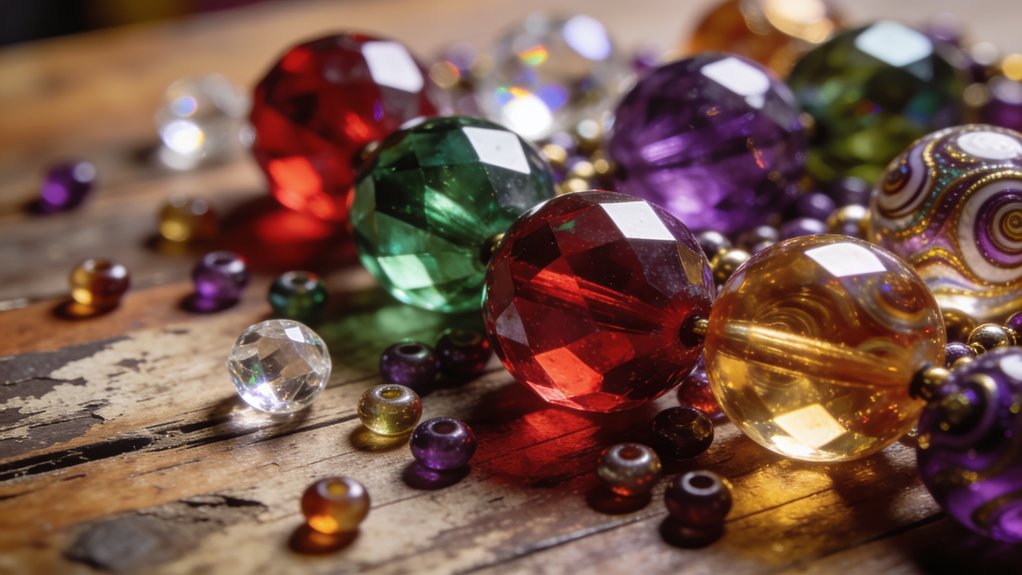
What to Check Before You Buy
A few quick checks save you money.
- Is it really glass? Glass feels cold when you first touch it and warms slowly. Tap two beads together, and glass makes a clear click.
- What's the price for? "Per dozen" and "each" are very different deals. Check the unit before you compare.
- How is it strung? Look for a strong cord and tight knots. A weak string is the first thing to fail.
- What does shipping add? Glass is heavy. Add the shipping cost before you decide which seller is cheaper.
How to Wear and Care for Glass Beads
Wear glass strands the way you'd wear any necklace. One or two strands look sharp with a plain top. Stack them with plastic parade beads if you want more color.
Leave them at home on parade day, though. The city's fire department tells parade-goers not to bring glass items to the route, and a crowd is a rough place for a breakable necklace. Glass beads are not for throwing, either.
Care is easy:
- Wipe beads with a soft, damp cloth and dry them right away.
- Store strands flat in a jewelry box with dividers, or hang them so they don't tangle.
- Restring a strand on fresh beading cord if the old string looks frayed.
Keep glass beads away from babies and toddlers. A broken bead is sharp, and loose beads are a choking risk.
Want to know what the three colors stand for? Read our guide to Mardi Gras bead colors and their meaning.
Images in this guide are AI-generated illustrations of beads. They are not photos of real strands for sale.
Frequently Asked Questions
Are glass Mardi Gras beads safe to throw from a float?
No. Glass can break when it lands and hurt someone. Krewes throw plastic beads and other soft or light throws. Keep glass strands for wearing, gifting and collecting.
Can I fix a glass strand if the string breaks?
Yes. Gather the beads, lay them out in order, and restring them on new cord. A bead shop can do it for you if the strand is old or worth a lot.
Are glass Mardi Gras beads worth anything?
New glass strands are worth about what you paid. Older strands can be worth more, based on their age, condition and maker. A dealer or an experienced collector can tell you more than a price guide can.
How can I tell glass from plastic without tools?
Hold the strand in your hand. Glass is heavier and feels cold at first. Then look at the holes, since glass beads often show a sharp, clean edge where plastic shows a seam.
Can kids wear glass Mardi Gras beads?
Older kids can, with an adult close by. Skip them for babies and toddlers. Any strand of beads can be a choking or tangling risk for a small child.