
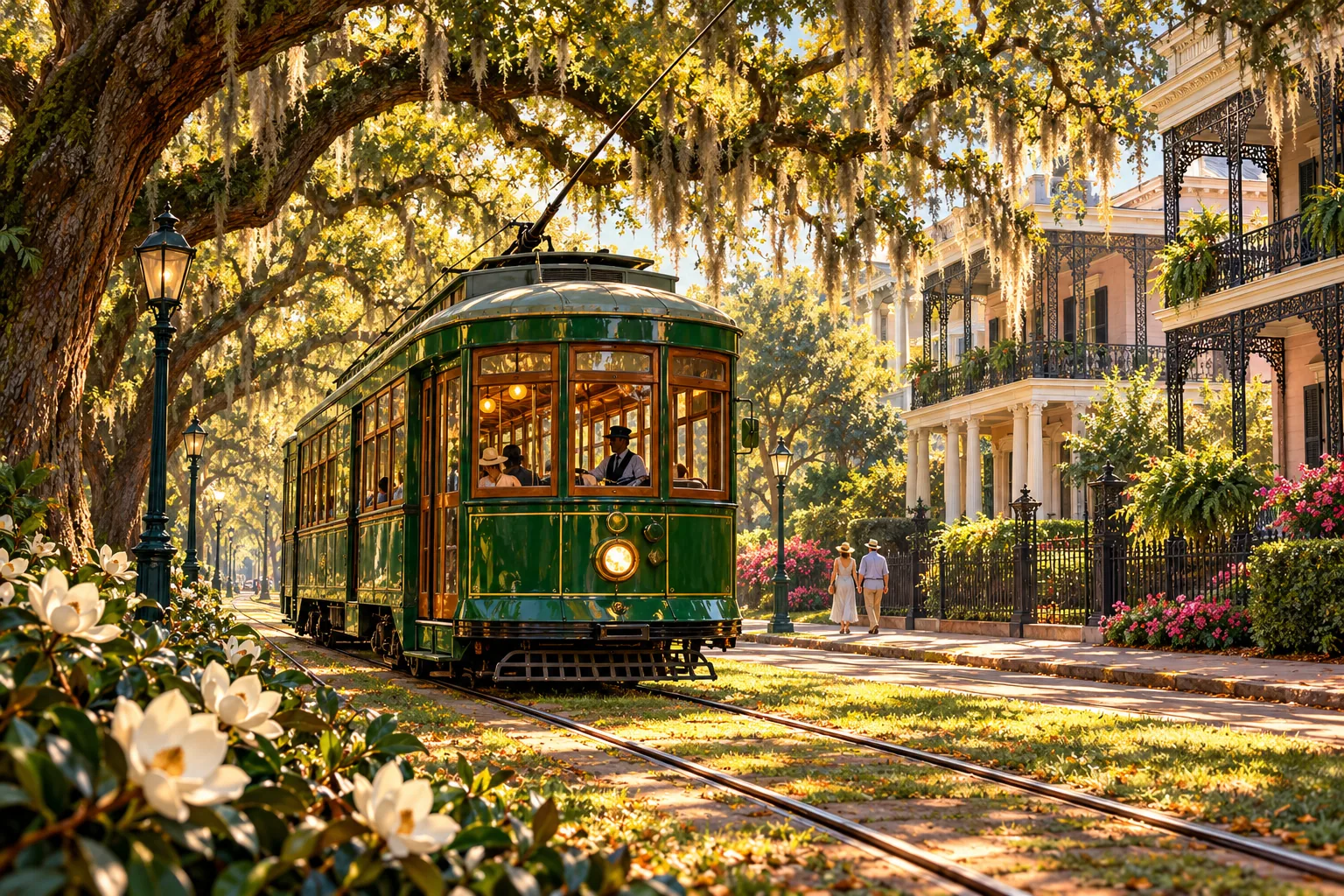
Riding the historic streetcars in New Orleans is more than just a way to get from point A to point B; it is a journey through the city's soul. Whether you are gliding under the canopy of oaks on St. Charles Avenue or heading toward the beauty of the Mid-City cemeteries, the streetcar offers a perspective you simply cannot get from a rideshare window. For the uninitiated, the system can be daunting. Between "exact change" requirements, the Le Pass app, and occasional "bus bridges" caused by track maintenance, a little planning goes a long way in ensuring your ride is as smooth as a Sazerac.
Navigating the Four Iconic Streetcar Lines
New Orleans currently operates four distinct streetcar lines. The most famous is the St. Charles Streetcar (Route 12). These iconic green cars are the oldest continuously operating streetcar line in the world. They do not have air conditioning, so be prepared for a breezy ride through the Garden District and Uptown. The route begins at St. Charles and Common Street and winds all the way to Carrollton Avenue. Essential stops include Washington Avenue for the Garden District and Lafayette Cemetery No. 1, and the Audubon Park stop for the zoo and Tulane University.
The Canal Streetcar (Routes 47 and 48) uses modern, air-conditioned red cars. Both lines start at the foot of Canal Street near the Mississippi River. The Route 47 (Cemeteries) branch takes you to the historic "Cities of the Dead" at the end of Canal Street. The Route 48 (City Park/Museum) branch delivers you to the gates of City Park and the New Orleans Museum of Art (NOMA). The Riverfront Streetcar (Route 2) runs along the French Quarter, connecting the French Market to the Convention Center, while the Rampart-St. Claude Streetcar (Route 46) links the Union Passenger Terminal to the Marigny neighborhood.
"The streetcar is the best way to see the architecture of the city at a human pace. Just remember that these are active transit lines for locals, not just tour rides, so keep the aisles clear and be ready for your stop."
How to Use the Le Pass App and Jazzy Passes
While the RTA still accepts cash, it must be exact change, and drivers cannot provide change. This makes the Le Pass app an essential tool. You can purchase your tickets in advance and scan the QR code when you board. The app also provides real-time tracking, which is invaluable for planning your day. If you plan on riding more than twice in a single day, the 1-Day Jazzy Pass for $3.00 is a no-brainer. For a weekend trip, the 3-Day Jazzy Pass at $8.00 offers the best value. These passes are valid for all RTA transit, including the streetcar, bus, and ferry. Note that the ferry requires a separate $2.00 fare if you do not have a Jazzy Pass, so the pass pays for itself quickly if you plan to cross the river to Algiers Point.
Maintenance, Etiquette, and Practical Tips
One of the biggest frustrations for visitors is the "bus bridge." Because the streetcar tracks are historic, maintenance is a constant reality. As of late August 2026, the Canal Streetcar is experiencing weekday service adjustments. During morning and mid-afternoon hours, the streetcars may end their downtown run at Canal & Liberty, with a temporary bus bridge carrying passengers to the riverfront. Always check the "Service Alerts" section of the RTA website or the Le Pass app before you head out. If you see a bus with a sign that says "Streetcar Shuttle," it follows the same route and honors the same passes. These adjustments are usually well-marked, but they can add 15 minutes to your travel time.
Boarding a streetcar has its own set of unwritten rules. You should always board at the front of the car to pay your fare or scan your app. Once you have paid, move toward the back of the car to make room for others. When you want to get off, pull the yellow cord running along the windows about half a block before your stop. Unlike some other cities, New Orleans streetcars have a strict no alcohol policy, even if you are carrying a "go-cup" from a French Quarter bar. For those planning their stay, booking a hotel in the Garden District or Lower Garden District provides the easiest access to the St. Charles line, allowing you to bypass expensive parking fees and rely entirely on the historic rail network.
Exploring Beyond the St. Charles Line
While the St. Charles line gets all the glory, the Rampart-St. Claude Line is a hidden gem. This route takes you past Louis Armstrong Park and Congo Square, eventually dropping you off at the edge of the Marigny and Bywater neighborhoods. It is the perfect way to reach the jazz clubs of Frenchmen Street without the hassle of parking. Similarly, the Canal Streetcar offers a look at the "real" New Orleans beyond the French Quarter. Taking the Route 48 car all the way to City Park allows you to see the Mid-City neighborhood, home to some of the city's best local eateries. Mastering the RTA system is the key to a truly authentic and stress-free New Orleans experience.
What to verify before you go
- Current Fares: Confirm the 2026 fare schedule on the official RTA website before purchasing passes.
- Service Alerts: Check the Le Pass app for real-time "bus bridge" notifications, especially for the Canal Street line.
- Exact Change: If you are not using the app, ensure you have $1.25 in coins or small bills.
- Operating Hours: While many lines run 24/7, frequency decreases significantly after midnight.
Sources and update notes
This guide was compiled using independent research for NewOrleans.blog and is based on the Regional Transit Authority (RTA) operational data as of August 2026. For the most current schedules and route maps, please consult the following primary sources: