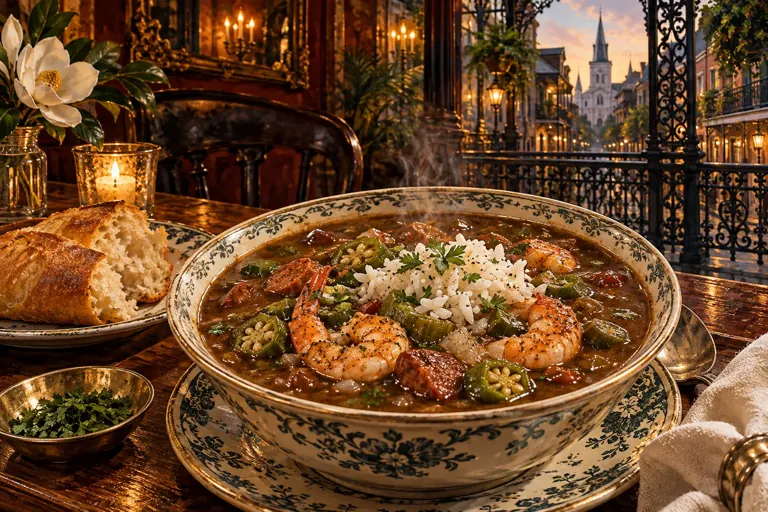

Meals From the Heart Cafe in the French Market
The cafe's official website lists gluten-free options and describes its okra gumbo as gluten-free. It lists its address as 1100 North Peters Street, stall 13. Use the official website and menu to check the current offering before you visit.
Ask which version of the dish you are ordering, whether substitutions change its ingredients and how it is prepared. The website also advertises vegan beignets: vegan and gluten-free are different descriptions, so do not assume those pastries meet a gluten-free requirement.
Contact GW Fins about dietary needs
GW Fins provides a dietary-accommodation page and culinary inquiry form. Its chefs invite questions about allergies, intolerances and other dietary needs. Contact the restaurant before booking and explain the preparation requirements that matter to you. Reconfirm them with your server when you arrive.
This guide does not assert that GW Fins uses a dedicated gluten-free fryer or that any dish is guaranteed free from cross-contact. Get an answer about your actual order from the kitchen rather than relying on an older review.
Questions to ask before ordering
- Does this recipe contain wheat flour, breadcrumbs, batter, roux or a sauce with gluten-containing ingredients?
- Are fried items cooked in oil shared with breaded foods?
- Are preparation surfaces, utensils and cooking equipment shared?
- Can the kitchen explain how it handles the requirements you describe?
- Have any ingredients or preparation methods changed since the menu was written?
Plan the meal before the sightseeing
Choose a restaurant you have contacted and a backup option before building the day's route. Keep reservation details and the restaurant's response handy. Avoid assuming that every location, shift or seasonal menu has the same options. If staff cannot answer your questions, choose another meal or venue.
Why Creole kitchens are harder than the menu suggests
Flour is structural in this cuisine, not incidental. A dark roux — flour cooked slowly in fat — is the base of most gumbos, étouffées and many sauces, so a dish that reads as meat, seafood and rice can still start with wheat. Fried seafood is another quiet risk: even when a kitchen offers a corn-flour dredge, the fryer oil is often shared with battered items, and shared oil matters for celiac diners even when the coating itself is safe.
Bread crosses the table constantly. Po-boys are built on wheat loaves, bread service is standard at sit-down restaurants, and beignets throw powdered sugar and wheat flour into the air of the cafés that make them. None of this means the French Quarter is off-limits. It means the useful question is rarely “is this dish gluten-free?” and almost always “how is this dish prepared, and what does it share equipment with?”
Dishes that tend to be safer starting points
Some of the city’s signatures are naturally closer to safe than others, which makes them better openers for a conversation with the kitchen:
- Grilled or broiled fish. Gulf fish finished with butter or a citrus sauce usually avoids flour entirely, though you should still ask about dredging and shared grill surfaces.
- Raw oysters. Served on the half shell with lemon and cocktail sauce, they skip the fryer altogether. Charbroiled oysters are often flourless too, but confirm the topping and any bread served alongside.
- Red beans and rice. Many versions thicken by simmering rather than with a roux, but this varies kitchen to kitchen, so ask specifically about flour.
- Barbecue shrimp. Despite the name, the classic preparation is shrimp in a peppery butter sauce. The catch is the French bread served for dipping — ask for it to be left off the plate if cross-contact is a concern.
Treat this as a conversation starter, not a guarantee. Recipes differ between restaurants and change over time, which is why the preparation question matters more than the dish name.
Say what kind of gluten-free you need
Kitchens respond differently to “I prefer to avoid gluten” and “I have celiac disease and cross-contact makes me ill.” If you need strict handling — fresh gloves, a clean pan, no shared fryer — say so in those words when you book and again when you order. Most French Quarter restaurants take reservations by phone or through their own sites, and a short call during an off-peak afternoon is the most reliable way to learn whether a kitchen can genuinely separate your meal rather than simply remove the obvious bread.
Timing helps as much as phrasing. A kitchen in the middle of a Friday dinner rush has less room to accommodate careful preparation than the same kitchen at an early weekday seating. If your condition is serious, aim your most ambitious restaurant meals at quieter services and keep the busiest nights for places that have already confirmed their process with you.
Carry a backup plan
Even a well-planned day can end at a counter that cannot help you. A small kit — shelf-stable snacks you trust, picked up from a grocery before you settle into sightseeing — turns that moment into an inconvenience instead of a problem. It also removes the pressure to accept a risky meal because the group is hungry and the next option is blocks away. If you are staying somewhere with a refrigerator, a single grocery stop early in the trip covers breakfasts and gives every restaurant decision a fallback.
Breakfast and coffee without the wheat
Mornings are quietly the hardest meal of a gluten-free Quarter trip, because the neighborhood’s famous breakfast is fried dough under powdered sugar and its cafés run on pastry. Plan the first meal rather than improvising it: hotel breakfasts often include eggs and fruit you can verify in one conversation, grits are naturally corn-based — though shared equipment and add-ins still warrant a question — and a grocery stop for safe staples turns your room into the one guaranteed-safe breakfast in the city. Coffee itself is straightforward; it is the flour hanging in the air of the beignet cafés that celiac travelers may prefer to admire from the sidewalk. Front-loading a reliable breakfast has a second benefit: you start each day fed, which keeps you patient enough to do the lunch and dinner verification this guide describes instead of accepting the first risky counter because you are starving on Royal Street at noon.
Sources and update notes
Official restaurant pages reviewed October 21, 2026. This is a planning guide, not a kitchen inspection or a medical recommendation. Earlier unsupported claims about dedicated fryers and guaranteed safety have been removed.