
New Orleans field notes
What to Pack for a Rainy Day in New Orleans: A Practical Checklist
What to pack for a rainy day in New Orleans: a lightweight rain jacket, practical shoes, a protected day bag, and a simple carry-on checklist.
This guide may contain affiliate links. We may earn a commission at no extra cost to you.
Rain can change a New Orleans plan quickly, especially when warm, humid weather turns a short shower into a heavier burst. The best approach is not to pack for every possible condition. Bring a few lightweight items that protect your feet, phone, and day bag, then leave room to adjust your plans when storms develop.
Quick checklist for a rainy New Orleans day
Start with this compact list before you leave home or your hotel:
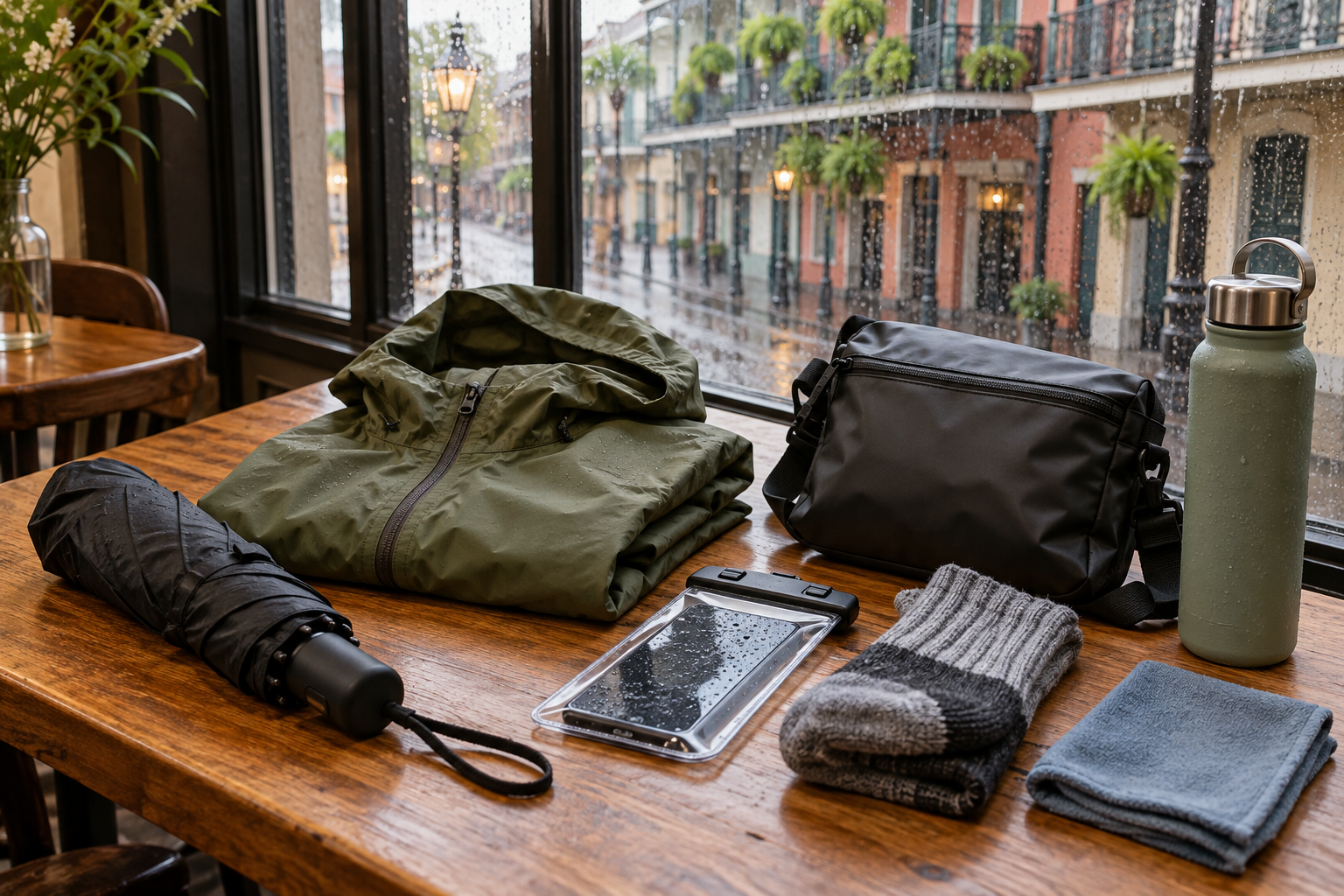
- A lightweight waterproof or water-resistant rain jacket with a hood.
- Comfortable shoes with dependable traction; choose a pair that can handle wet pavement and dry reasonably quickly.
- A compact umbrella for short walks between indoor stops.
- One spare pair of socks in a sealed pouch.
- A small waterproof pouch or dry bag for your phone, wallet, keys, and travel documents.
- A protected day bag with a zipper or cover.
- A microfiber cloth or small quick-dry towel.
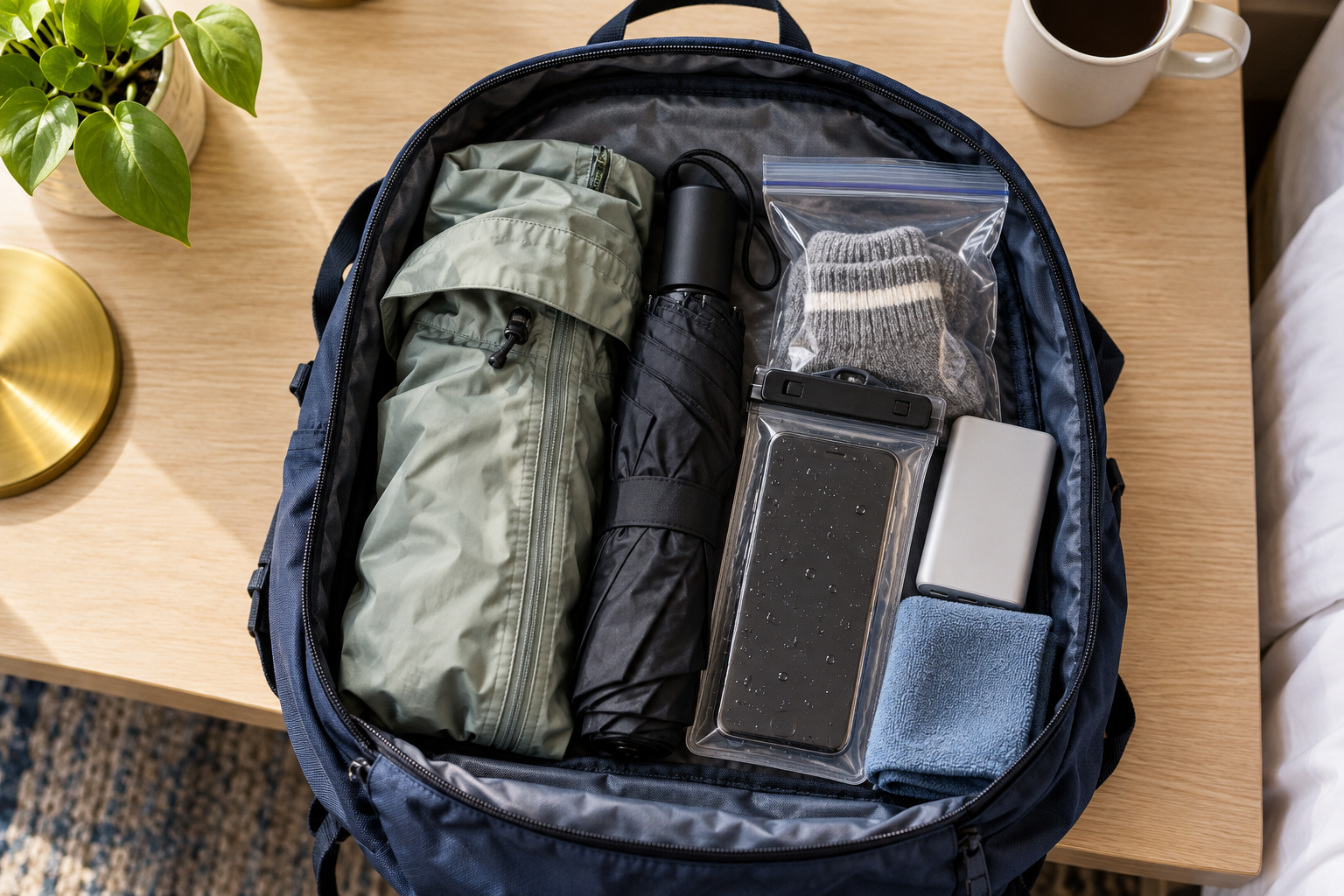
- A portable charger and a short charging cable kept in a separate pouch.
Choose light layers instead of bulky rain gear
A breathable rain jacket is usually more useful than a heavy coat in New Orleans. Look for a hood that stays in place, sealed or covered pockets, and a cut that leaves room for a light layer underneath. A quick-dry shirt or lightweight base layer can be more comfortable than thick cotton after a shower. Pack one thin mid-layer if you expect to move between warm outdoor air and strongly air-conditioned interiors.
A foldable poncho can be a reasonable backup when you want coverage over a day bag, but it should not replace comfortable shoes or a protected phone. Avoid packing several versions of the same item. One rain shell, one compact umbrella, and one spare pair of socks cover more situations than a suitcase full of duplicate gear.
Protect the items you need most
Keep electronics and identification in a zippered waterproof pouch inside your day bag rather than in an exterior pocket. Put the spare socks and towel in a second sealed bag so they remain useful after the first wet stretch. If you carry medication, place it in its original labeled container inside a protected pouch and follow your normal travel instructions.
The featured illustration and the daypack illustration above are AI-generated editorial images. They are included to explain the packing ideas and are not photographs of a specific café, street, product, or forecast condition.
Adjust your route when weather turns severe
Light rain may only call for a shorter walk between indoor stops. Lightning, very heavy rain, or rapidly worsening conditions are different: pause outdoor plans and move into a safe indoor location. Check the National Weather Service New Orleans/Baton Rouge forecast and alerts before setting out, and check again if the weather changes.
Do not try to walk through flooded areas. Water depth and current can be difficult to judge, and a route that looked passable earlier may not remain safe. If a storm affects your schedule, use the official New Orleans rainy-day itinerary ideas to shift toward indoor activities instead of forcing the original route.
Make the rest of your trip easier to adjust
Keep your rainy-day items together so you can move them from a suitcase to a day bag without repacking everything. If you are still choosing an itinerary, compare the site’s New Orleans trip-planning guides and build a plan with indoor alternatives near the neighborhoods you want to explore. Travelers who prefer fewer transfers can also start with the three-day New Orleans itinerary without a car and add weather-friendly stops around it.
Final carry-on check
- Rain jacket and compact umbrella packed where you can reach them.
- Comfortable, grippy shoes on your feet rather than buried in luggage.
- Phone, wallet, keys, and documents inside a sealed pouch.
- Spare socks and a small towel packed separately.
- Weather alerts checked before outdoor plans.
- An indoor backup selected before the rain becomes heavy.
A simple kit is enough: keep your essentials dry, choose footwear you can comfortably use on wet pavement, and give yourself permission to pause outdoor plans when lightning or heavy rain makes them unsafe.
Planning another part of your trip? Browse the latest blog posts or return to trip planning.