
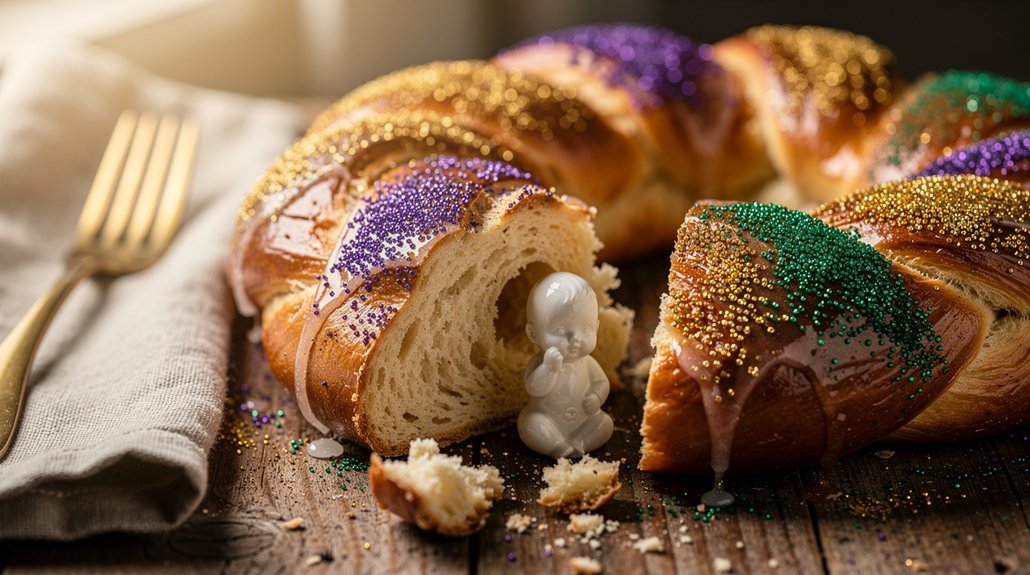
A king cake is a ring of sweet, buttery dough that shows up all over New Orleans during Carnival season. It wears purple, green and gold sugar on top, and it hides a tiny baby figure inside. Find the baby in your slice and you're king or queen for the day. You also owe the group the next cake.
This is a researched guide, not a bakery review. Sources were checked on November 28, 2026. Mardi Gras Day falls on February 9, 2027, so king cake season runs from January 6 until then.
As an Amazon Associate I earn from qualifying purchases. Product links go to Amazon searches, so you can compare what's in stock.
Key Takeaways
- A king cake is a sweet yeast cake shaped in a ring and topped with purple, green and gold sugar.
- The season starts on January 6, called Epiphany or Kings Day, and ends on Mardi Gras Day.
- A small baby figure is hidden inside or tucked beside the cake.
- Whoever finds the baby is "king" for the day and brings the next cake.
- The baby is a choking risk, so warn your guests and keep it away from small kids.
What a King Cake Is
Picture a cinnamon roll that grew up and joined a parade. The dough is soft and rich with butter, eggs and milk, a lot like brioche. Bakers roll it, twist or braid it, and join the ends to make a ring or an oval.
The top gets a sweet glaze and three bands of colored sugar. Plain cinnamon is the classic filling. Cream cheese, praline, fruit and chocolate are easy to find now, and bakeries keep adding new ones each year.
You don't need a fork or a plate to enjoy it. In New Orleans, people eat king cake at work, at school and at parade parties from January into February. Food Network describes it as a Gulf Coast specialty made during Carnival, the stretch between Epiphany and Mardi Gras.
Where the King Cake Tradition Came From
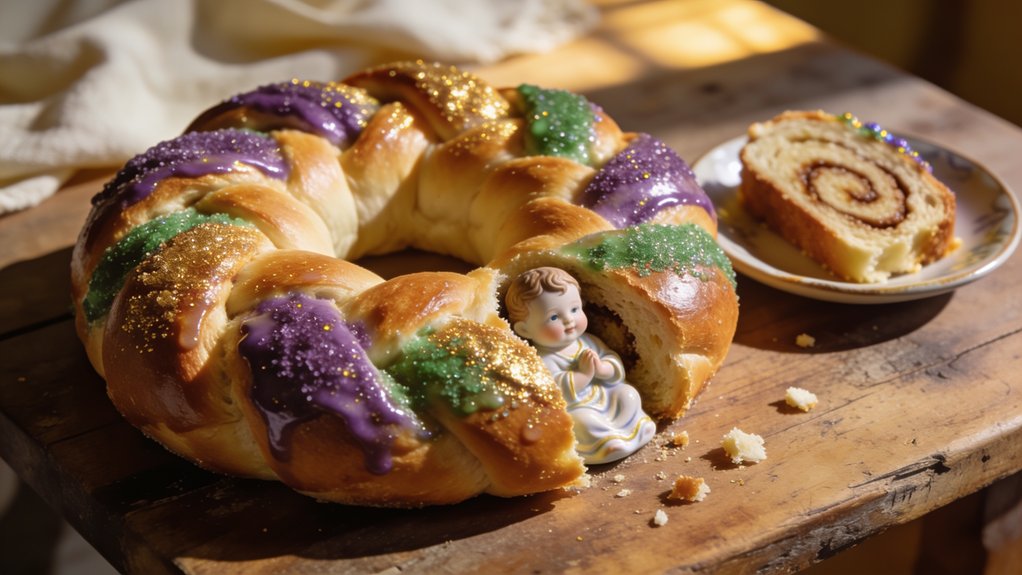
The cake is older than New Orleans. Food historians trace the idea back to winter feasts in ancient Rome, where a bean was hidden in a cake. Christian Europe later tied the custom to Epiphany, the day that marks the three kings' visit to the baby Jesus.
France has its galette des rois, and Spain has its rosca de reyes. Both are Kings Day cakes with a prize baked inside. Writers who study the cake point to French and Spanish roots for the Louisiana version, and they don't all agree on which came first.
What's clear is the calendar. In New Orleans, the first cake of the year is served on January 6. NPR's reporting describes king cake as a frosted yeast cake that bakeries turn out between Kings Day and Fat Tuesday, the last day before Lent.
Why There's a Baby Inside
The baby is the modern version of the hidden bean. The old game was simple: one slice has the prize, and the finder gets the crown.
The plastic baby has a local story. The Southern Food and Beverage Museum's oral history says Donald Entringer of McKenzie's Bakery used small china dolls starting in the late 1930s, after a salesman sold him a supply. Most bakeries switched to cheaper plastic babies after World War II.
Many people say the baby stands for the infant Jesus, which fits the Epiphany link. Others treat it as a plain good luck charm. Both readings are common, and nobody at the party will quiz you on it.
Some bakeries now place the baby beside the cake and let you hide it yourself. Want extras for a party? You can buy king cake babies by the bag.
What the Purple, Green and Gold Mean
The colors come from Rex, one of the city's oldest parading groups. The Rex Organization says its royal colors have been used since its founding, and that the 1892 parade theme, "The Symbolism of Colors," gave them their well-known meanings.
- Purple stands for justice.
- Green stands for faith.
- Gold stands for power.
Rex also notes that the first meaning its founders had in mind was never made clear. So the neat three-word answer came about twenty years after the colors did. It's still the answer you'll hear at every king cake party.
At home, the look is easy to copy with purple, green and gold sanding sugar.
King Cake Rules Everyone Follows
There are only a few rules, and people take them more seriously than you'd think.
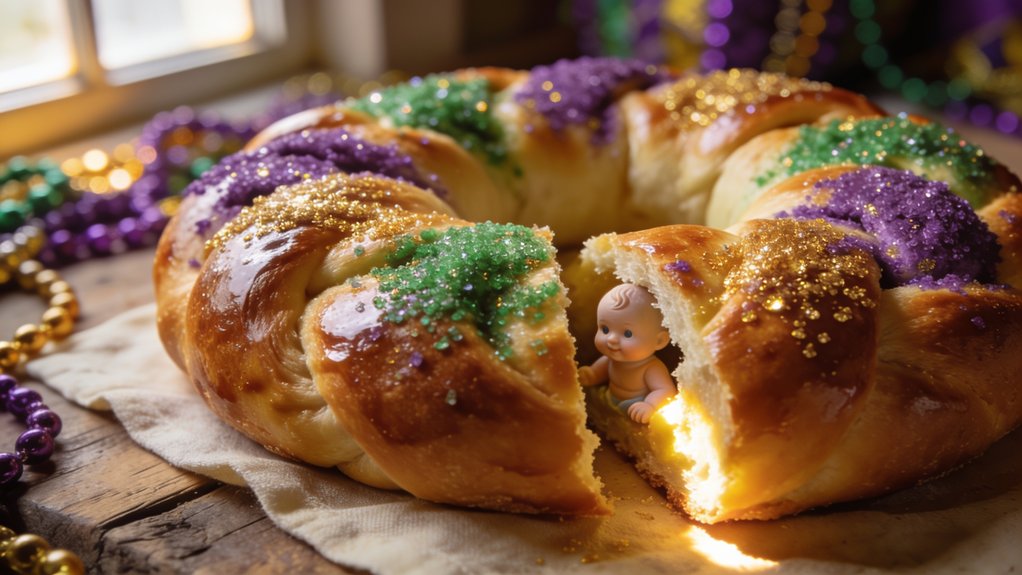
- Wait for January 6. Eating king cake before Kings Day is seen as bad form.
- Stop after Mardi Gras. Lent starts the next day, so the season ends.
- Find the baby, buy the next cake. In offices this keeps a cake on the table every week.
- Say when there's a baby inside. A warning saves teeth and keeps kids safe.
The baby is small and hard, so treat it as a choking risk. Take it out before you serve young children, or set it on top where everyone can see it.
How to Try King Cake If You're Not in New Orleans
You have three good options. Many Louisiana bakeries ship cakes across the country during the season. Some grocery stores outside the Gulf Coast stock them in January and February. Or you can bake one.
Baking is easier than it looks. A king cake kit comes with the mix, sugar and a baby. If you'd rather start from flour and yeast, follow our step-by-step king cake recipe.
Coming to town for the season instead? Our guide to February in New Orleans helps you plan around the parades.
Images in this guide are AI-generated illustrations of a king cake. They are not photos of a real bakery's cake.
Frequently Asked Questions
Are king cakes still made with beans or coins instead of babies?
Some are. The French and Spanish Kings Day cakes still use a bean or a small charm. In New Orleans you'll almost always get a plastic baby. A few bakeries use their own keepsake figure, so ask when you order.
Who buys the next king cake?
The person who finds the baby does. At an office, that means bringing a fresh cake for the next gathering. Some groups let the finder host the next party instead. Ask your group which rule they play by.
Is it safe to eat a king cake with a plastic baby inside?
The cake is fine to eat, and the baby is not food. Take the baby out before you slice, or tell everyone it's in there. Check each piece before you hand it to a young child.
Why are king cakes only sold between Epiphany and Mardi Gras?
The season follows the church calendar. Carnival starts on Epiphany, January 6, and ends on Mardi Gras Day. Lent begins the next morning, so the cakes go away until next year. Some bakeries ship cakes year-round, but locals hold to the season.
Can I find king cake outside Louisiana?
Yes, with a little hunting. The Gulf Coast is your best bet, and some larger grocery chains carry king cakes during the season. Many New Orleans bakeries also ship. Order early, because the weeks before Mardi Gras are the busiest.